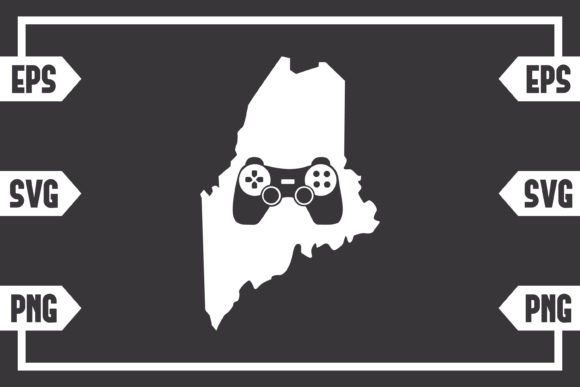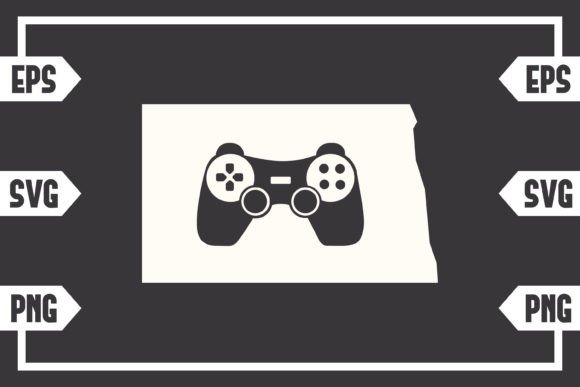
North Dakota - Gaming Controller
When you download the North Dakota - Gaming Controller digital bundle, you gain immediate access to three versatile file formats kept inside a single .zip archive. This is not a physical product. Instead, you receive a crisp SVG, a production‑ready EPS, and a high‑resolution transparent PNG. Together, these assets slot directly into personal projects, client work, and branded merchandise, eliminating the need to commission custom artwork or spend hours tracing and redrawing.
The design merges a classic gaming controller silhouette with iconic North Dakota references, making it suitable for locals, alumni groups, esports teams, tournament organizers, and anyone who wants to fuse state pride with gamer culture. Because the files are digital, they can be scaled, recolored, layered, and combined with other elements without degradation. This article examines how to integrate the asset kit into practical workflows before, during, and after creative execution, covering software compatibility, organization strategies, quality control, and long‑term reuse.
What the Digital Bundle Contains and Where It Fits in Your Process
The .zip download includes one SVG, one EPS, and one PNG file. Each format serves a distinct role depending on where you are in a project timeline. Early on, the SVG file allows you to preview and adjust vector paths in browser‑based apps or desktop software like Inkscape and Adobe Illustrator. It’s the format you’ll gravitate toward when you need to change colors, resize for a new canvas, or break the design into individual layers for multi‑color vinyl cuts.
The EPS file, often the workhorse for print professionals, opens natively in high‑end design suites and maintains editable text (if present) and clean curves. If your workflow passes through Corel Draw, Silhouette Studio Designer Edition, or commercial print setups, the EPS ensures smooth handoffs without conversion errors. The PNG, at 300dpi with a transparent background, fits scenarios where you need a quick, high‑quality raster image to drop into presentation slides, social media graphics, mockups, or web pages without worrying about clipping paths.
Before you even launch your primary design software, deciding which file to use sets the foundation for your entire build. Having all three in one folder gives you the freedom to pick the right format for each stage: concept, prototype, production, and final delivery.
Personalizing Apparel and Accessories
Heat‑press enthusiasts and vinyl crafters frequently use designs like this to create custom t‑shirts, hoodies, hats, and tote bags. Import the SVG into Cricut Design Space or Silhouette Studio, adjust the size to fit your blank, and cut heat‑transfer vinyl in team colors. The North Dakota - Gaming Controller graphic works especially well for intramural sports groups, LAN party attendees, or summer camp giveaways. Because the controller shape is universally recognized, you can even split the design—placing the state outline or motto on the front chest and the controller on the sleeve—to build a coordinated set.
Branding for Local Gaming Communities
Tournament organizers and streamers often need consistent branding across overlays, thumbnails, signage, and merchandise. The transparent PNG can be placed on a webcam border or lower‑third graphic within OBS Studio, while the vector files supply the sharp edges needed for banners and printed lanyards. By using the same source graphic everywhere, you maintain a cohesive look that reinforces community identity. The asset’s layered structure also allows you to swap the state color palette to match a team’s existing branding without altering the controller’s silhouette.
Educational and Fundraiser Campaigns
Teachers, coaches, and nonprofit coordinators preparing materials for STEM nights, coding clubs, or esports fundraisers can drop the PNG right into flyers, permission slips, and social posts. The high resolution means they can enlarge the image for poster printing without pixelation. If the campaign evolves into a larger storefront, the SVG becomes the foundation for bulk‑ordered printed materials like stickers and buttons. Having a single source for both digital promotion and physical merchandise eliminates mismatched logos and saves time when assets must be handed off to volunteer designers.
Workflow Integration: From File Download to Finished Output
Integrating the North Dakota - Gaming Controller files into your existing process requires a few deliberate steps that improve speed and reduce rework. The following approach works regardless of whether you are a solo entrepreneur, a content creator, or part of a larger creative team.
Unzip and Organize Immediately
Right after purchase, extract the .zip into a dedicated project folder with a clear naming convention. For example, create a directory called ND_Gaming_Controller and inside, label subfolders by format: SVG_Working, EPS_Print, PNG_Web. This small upfront investment prevents the “lost file” panic when deadlines approach. If you use cloud‑based storage, sync this folder so team members access the same master copy.
Map the Design to Your Canvas Before Scaling
Open the SVG or EPS in your vector editor and immediately check the artboard size and document color mode. If your final product requires CMYK for print, switch the mode before you start adjusting colors. Create a duplicate layer or artboard to experiment with different colorways—perhaps one version in North Dakota State University gold and green, another in Bismarck‑inspired earth tones. Keeping iterations within a single file lets you toggle visibility and export variations without re‑importing the original asset.
Combine with Other Resources for Deeper Customization
The controller graphic isn’t meant to live in isolation. Pair it with typography that names the event or location. Overlap it on a state silhouette outline available from free map resources. Use the PNG in Canva or Photoshop to blend with textured backgrounds for a worn, vintage look. When you treat the asset as a module rather than a final product, each project receives a unique finish while retaining the core identity.
Software Compatibility and Handling Differences
While the files work across a broad range of applications, each program interprets data slightly differently. Knowing this helps you avoid unexpected results mid‑project.
- Cricut Design Space: Upload the SVG and use the “Attach” function to preserve layout if the design contains multiple elements. Always weld small overlapping paths to prevent the machine from making separate cuts.
- Silhouette Studio (Designer Edition): The SVG opens with editable compound paths. If you need to remove the state outline from the controller body, use the “Release Compound Path” option and regroup what remains.
- Adobe Illustrator and Corel Draw: The EPS retains curves and can be resized infinitely. When sending to a print shop, convert all text to outlines and embed any linked images, even if the design appears self‑contained.
- Inkscape (free alternative): Opens both SVG and EPS. Occasionally, gradients or complex masks require a mental check—simplify them before exporting a new SVG for cutting software.
- Raster apps (Photoshop, GIMP, Canva): Use the PNG. Keep the transparent background; if you need a solid backdrop, add a layer behind the graphic instead of flattening immediately, preserving future editability.
Maintaining Consistency and Quality Across Multiple Outputs
When one design appears on a website, a t‑shirt, a sticker, and a projected screen, tiny inconsistencies become obvious. Adopt a few quality‑control habits from the start. First, calibrate your monitor and use reference color swatches from a physical swatch book when selecting hues for the controller and state elements. Digital hex codes often look different between screens and print. Second, after scaling the vector to its final production size—say, 12 inches wide for a chest print—export a temporary PNG at 300dpi and zoom in to check for any unintended gaps or thin strokes that might not survive the cutting mat. Third, if the design will be embroidered, run it through an embroidery digitizer to see how the small details translate; you may need to simplify the state shape or controller buttons slightly for thread.
For multi‑format launches, maintain a master “approved” folder that locks the final design. Any new variations should be saved as copies, not overwritten on top of the original asset. This way, you can always return to the clean baseline if a team member inadvertently flattens, crops, or recolors the file incorrectly.
Long‑Term Use, Storage, and Licensing Awareness
Digital products like the North Dakota - Gaming Controller bundle don’t expire, but how you store and manage them determines whether they remain accessible years later. Keep a local backup on an external drive in addition to any cloud storage. Consider adding a plain‑text README file inside the asset folder that notes the purchase date, the license terms, and any usage limitations (such as whether reselling the raw files is permitted). This small record prevents confusion when you revisit the folder for a new project after months away.
From a licensing standpoint, personal and commercial use boundaries exist for most digital design purchases. Review the included license documentation. Typically, you can use the graphic on items you sell—shirts, decals, mugs—but you may not redistribute the digital files as a standalone product or claim copyright over the design itself. If you plan to incorporate the asset into a logo that will be trademarked, seek clarification or hire a designer to create a substantially modified version that builds on the purchased concept.
Practical Tips for Smooth Creative Sessions
Even experienced makers encounter friction points. Here are a few observations gathered from routine use of similar digital controller graphics.
- Pre‑flight your machine settings: If you plan to cut vinyl, test a small corner of the graphic first to dial in blade depth and pressure. The controller’s joystick circles and button details can be delicate.
- Keep a swatch palette file: Save the exact color values you apply to the controller as an Adobe Swatch Exchange (.ase) file or a simple screenshot, so next time you can match instantly.
- Layer intelligently: In your working SVG, separate the controller outline, button cutouts, and state graphic onto individual layers. This makes it easy to create two‑color vinyl transfers or screen‑printing separations later.
- Use the PNG for rapid prototyping: Before cutting or printing, place the PNG on a photo of the blank product to visualize placement and proportion. It takes seconds and catches scaling errors early.
Expanding the Asset’s Value Through Complementary Tools
The North Dakota - Gaming Controller file grows more useful when paired with other resources in your ecosystem. Font managers like Adobe Fonts or Google Fonts let you quickly pair the graphic with complementary text styles—bold sans‑serifs for an esports feel, slab serifs for a more rugged outdoorsy vibe. Mockup generators such as Placeit or Smartmockups accept the PNG file, allowing you to create realistic product previews for client approval without staging a photo shoot. Version control through apps like Abstract or even Git (for design teams) tracks changes when multiple people tweak the controller for different branches of a campaign.
If you deliver assets to clients, include a simple style guide PDF that showcases the approved controller graphic, its color variants, minimum size requirements, and spacing rules. This not only positions you as a prepared professional but also reduces the number of “Can you send me the logo again?” emails. The PNG works perfectly in those style guides, while the SVG file can be linked as the master source in a shared drive.
Troubleshooting Common Hiccups
Occasionally, a file may not behave as expected. The SVG might open with blank areas if the original designer used features not supported by your software’s SVG importer. In that case, open the EPS first, re‑save it as an SVG from Illustrator or Inkscape, and then upload to your cutting program. The PNG background might show a faint halo when placed over very dark colors; this can be fixed by using the “Defringe” or “Matting” tool in Photoshop to remove edge pixels that weren’t fully masked. Large‑format printers sometimes request a TIFF instead of a PNG—use the EPS to generate a high‑resolution TIFF at the exact dimensions needed, ensuring crisp output for banners and signs.
Remember that these files are provided as a finished product, not an editable template. If you need to heavily alter the controller shape—for example, turning it into a skeleton or adding wings—the SVG provides the cleanest starting point for your own modifications, but major structural changes fall under your own design effort. The asset is designed to save you time on the foundational elements so you can focus your creativity on the custom touches that make each project distinct.
Scaling Use Across Personal and Professional Boundaries
One of the quiet strengths of a well‑crafted digital asset like the North Dakota - Gaming Controller is its adaptability across different facets of life. A teacher might use the PNG to motivate students in a coding competition, then the same individual can cut the SVG on a Cricut to create laptop decals for a side business. A small brewery could print it on limited‑run coasters for a game night event. No matter the setting, the files remain unchanged while the applications multiply.
By treating the download not as a one‑off decoration but as a reusable component in a broader creative toolkit, you unlock ongoing value. The initial time invested in understanding the formats, setting up proper folders, and aligning the design to your workflow pays dividends every time you iterate on a new idea. And since the product is delivered instantly after purchase, you can move from concept to cutting or printing in a matter of minutes, keeping momentum high on the projects that matter most.